Dental SEO Prices Range From $500 to $5,000+
Pricing depends on factors like your market's competitiveness, the current state of your website, and how aggressively your practice wants to grow.
Here are some typical ranges you'll see:
| Monthly Price Range | What It Typically Includes | Best For |
|---|---|---|
| $500 – $1,000 | Foundational SEO including: Google Business Profile optimization, review management, 1–2 blog posts, and templated reporting. In most cases, this level focuses on maintaining a presence rather than driving meaningful growth. | Small practices producing under $750K in less competitive markets. In more competitive areas, this budget is usually not enough to move rankings in a noticeable way. |
| $1,000 – $2,500 | Foundational SEO plus regular content updates, link building, managing multiple local profiles, and performance tracking. This is where you start to see consistent growth, though timelines can vary depending on competition. | Practices targeting $750K – $2M in production looking to steadily increase patient flow. This range works well in moderate markets but can feel slow in highly competitive areas. |
| $2,500 – $5,000 | Comprehensive SEO including content development, link building, digital PR, and optimization for AI-driven search platforms like ChatGPT. At this level, you can expect to see meaningful improvements even in more competitive markets. | Established practices typically producing $2M–$4M annually or new practices with aggressive growth goals, especially in competitive markets. |
| $5,000+ | Aggressive growth strategy including advanced content marketing, authoritative backlink acquisition, conversion optimization, and AI search optimization. At this level, the focus shifts toward dominating key services and markets. | Multi-location practices or high-growth practices looking to rank competitively across multiple geographies and high-value procedures. |
Prefer to listen? Catch the full episode below:
What Impacts the Cost of Dental SEO?
Every practice is different, so I build custom estimates based on the following factors:
Market Competition
Practices in highly competitive cities often require a more aggressive SEO strategy to rank for high-value searches like dental implants, veneers, or Invisalign. For example, ranking for "cosmetic dentist" in Beverly Hills is far more competitive than in Bentonville, Arkansas.
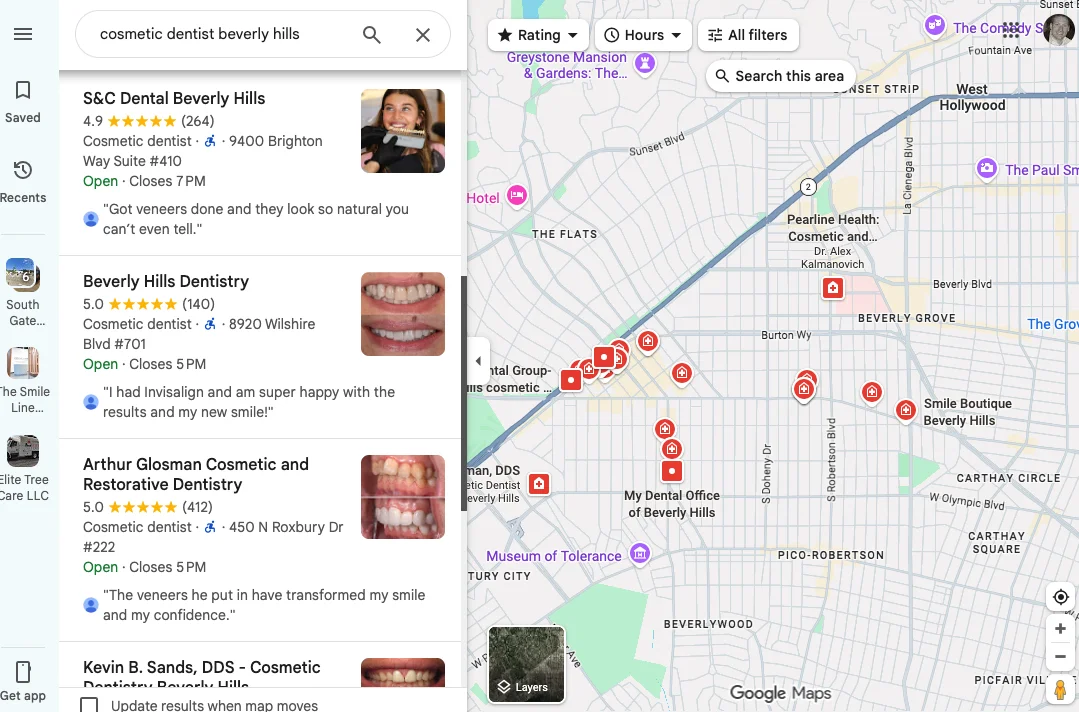
The more competitive the market, the more work is required.
The Current State of Your Website
A practice with a well-optimized website may only need incremental improvements. Practices starting with outdated websites, limited content, or technical issues usually require a larger upfront investment to build a solid SEO foundation.
Growth Goals
Some practices simply want to maintain visibility for a few key services, while others want to aggressively grow patient volume and dominate search results. Practices focused on rapid growth typically invest more heavily in content development, authority building, and ongoing optimization.
Number of Locations
Multi-location practices often require additional SEO work to optimize each location for local search results and Google Maps visibility.
However, there are also economies of scale. Core SEO efforts such as content creation, technical optimization, and authority building can often benefit multiple locations at once, making the investment more efficient as a practice grows.
Emerging Search Platforms
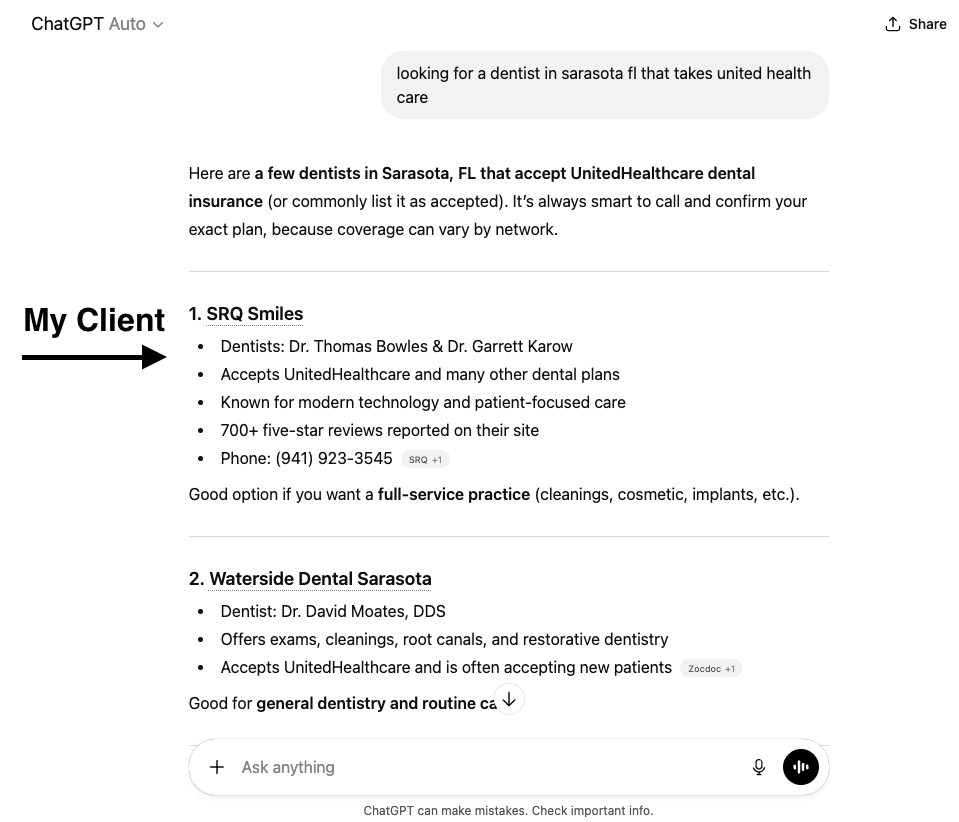
Many practices now invest in search engine optimization strategies designed to improve visibility in AI-driven platforms like ChatGPT and Google AI Overviews.
Optimizing for these platforms often requires additional work, such as structuring content for AI answers and strengthening authority signals.
Your SEO Partner's Expertise
Just like dentistry, there is a wide range of experience and specialization among SEO professionals. Some providers work across many industries, while others specialize in healthcare and dental practices.
Specialists may charge more, but their experience in how patients search for treatments like implants, Invisalign, or cosmetic dentistry can often lead to more effective strategies and stronger long-term results.
How to Figure Out What Your Practice Will Pay
Finding out how much SEO will cost your practice is easy if you go about it the right way. Here are a few tips to speed up the process and ensure you find the right SEO partner.
1. Ask for price ranges first
Most consultants and agencies should be able to provide estimates over email, allowing you to quickly understand your options before any calls take place.
2. Provide the right information
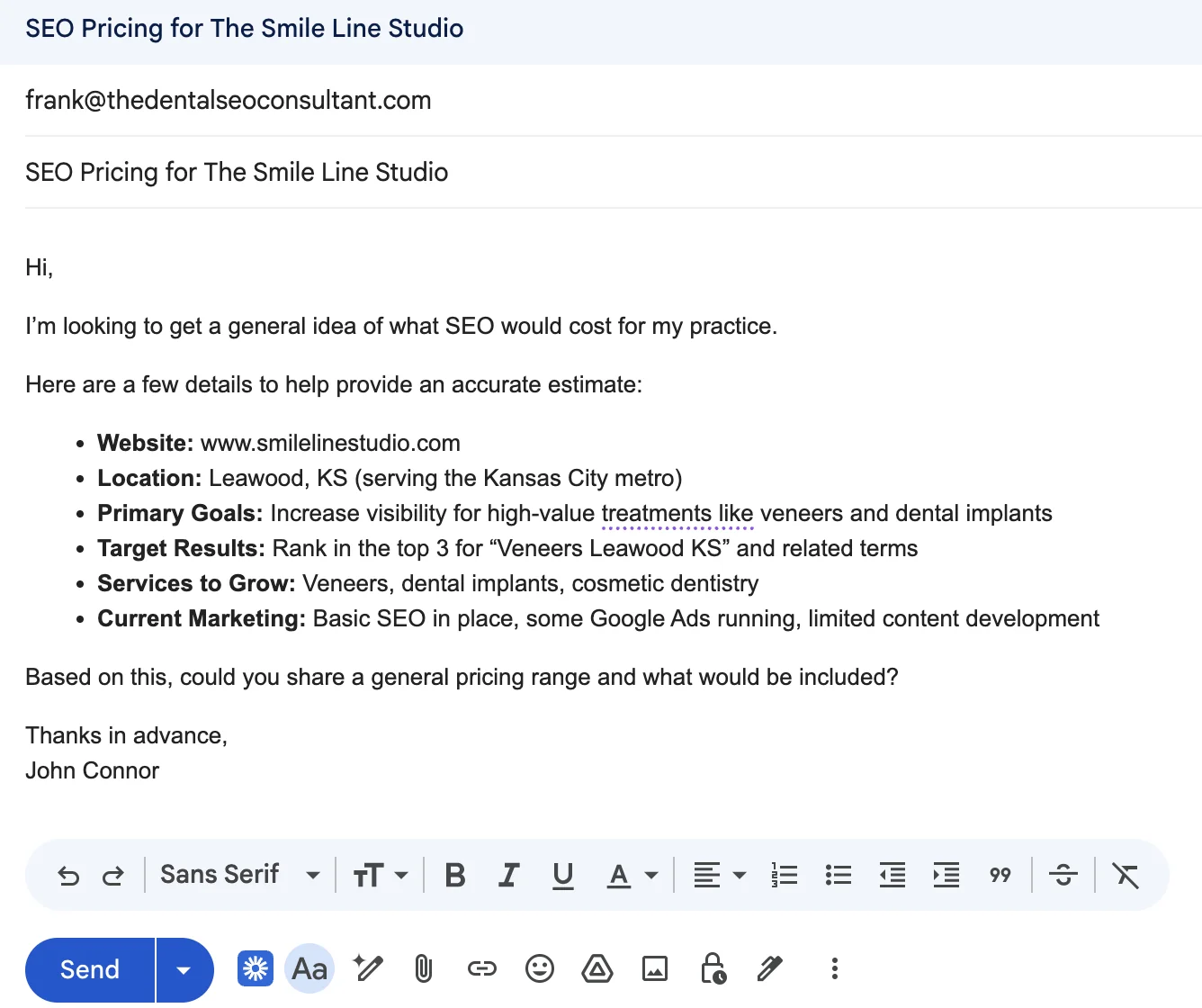
The accuracy of the estimate depends on the information you provide. At a minimum, include the following:
- Your website
- Your location and target market
- The results you want to see (rank #1 for Invisalign)
- The services you want to grow (implants, Invisalign, etc.)
- What you are currently doing for marketing
You don't have to share your entire marketing plan, but the more details you provide, the more accurate the estimate will be. Here's an example:
3. Compare more than just price
Once you start talking to SEO companies, don't just look at the monthly cost. It's important to ask:
- What is included?
- Do you have case studies showing results?
- Will I have direct access to the person doing the work?
- Will I be locked into a long-term contract?
- What if I decide to leave, will I have access to my data?
These are the questions most reputable consultants and agencies can answer.
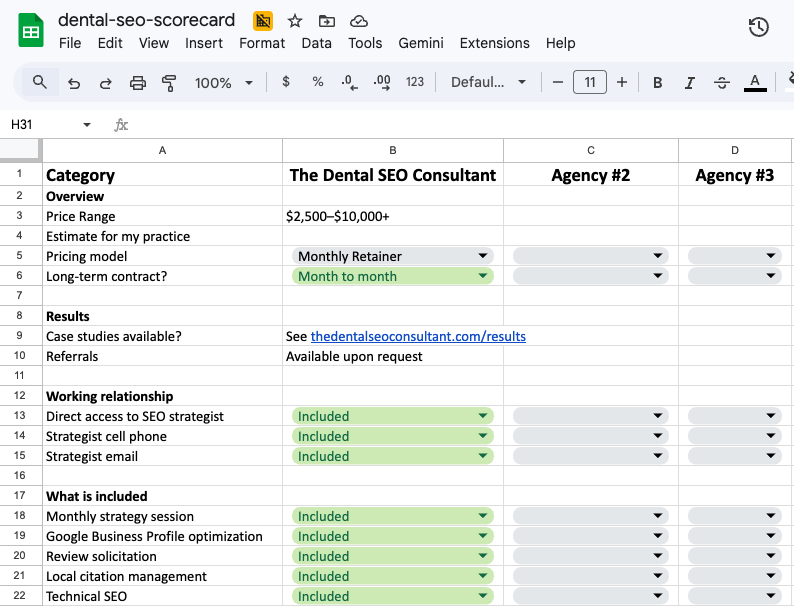
4. Use my Dental SEO Scorecard to compare options
If you want a structured way to evaluate options, I put together a simple scorecard you can use to compare pricing alongside the factors that actually matter.
You can see how I break this down using my Dental SEO Scorecard below.
What Results Should You Expect From SEO?
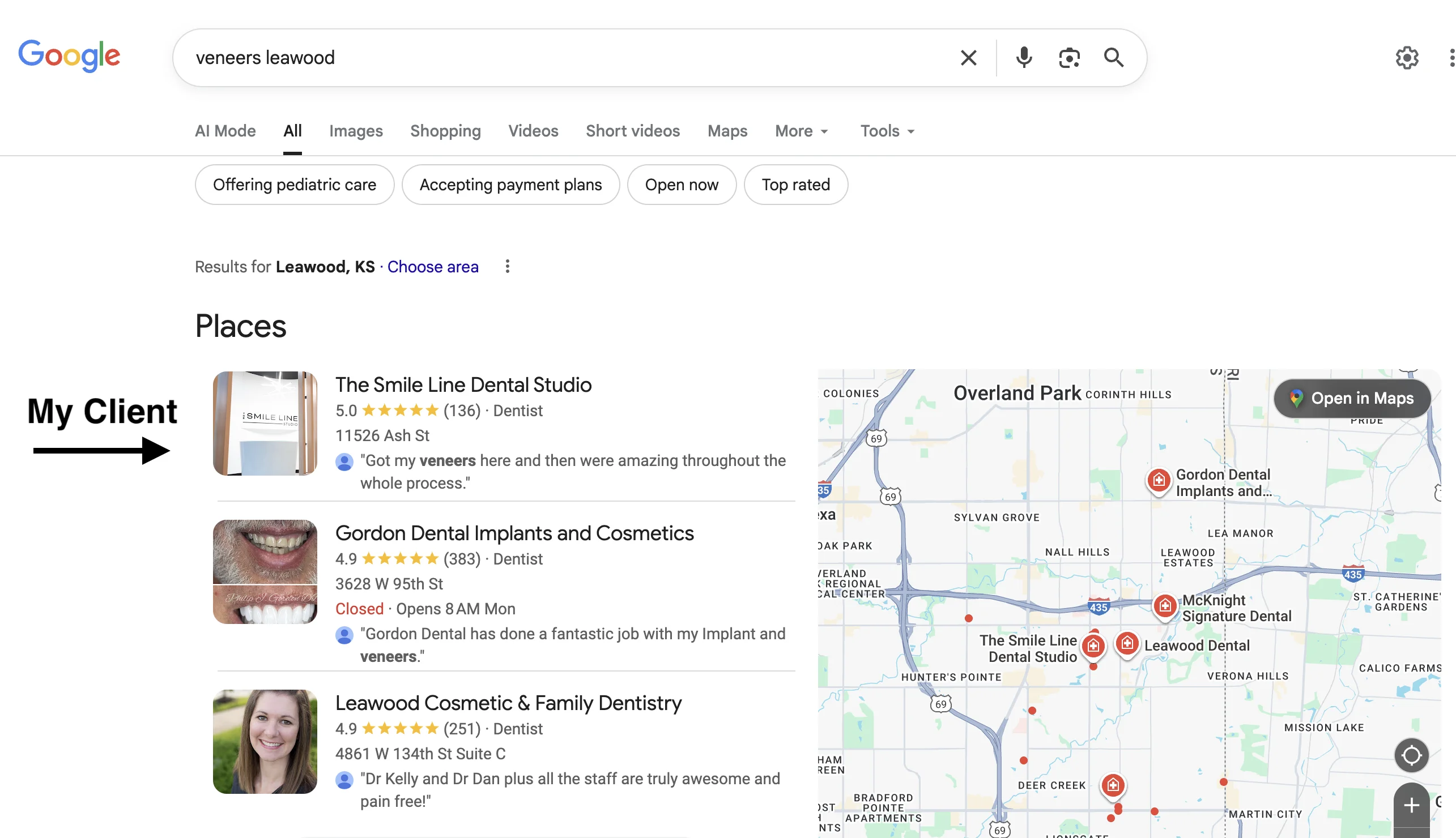
The best way to understand what SEO can do for your practice is to look at real results. Here's what that looked like for one of the practices I worked with.
Case Study: The Smile Line Studio Doubled Its Traffic
The Smile Line Studio had an aggressive goal to double its organic traffic for high-value treatments in a competitive Kansas City market. The goal was to accomplish this within one year.
Through a comprehensive approach that balanced short-term wins with long-term strategy, we were able to increase organic traffic by more than 125%.
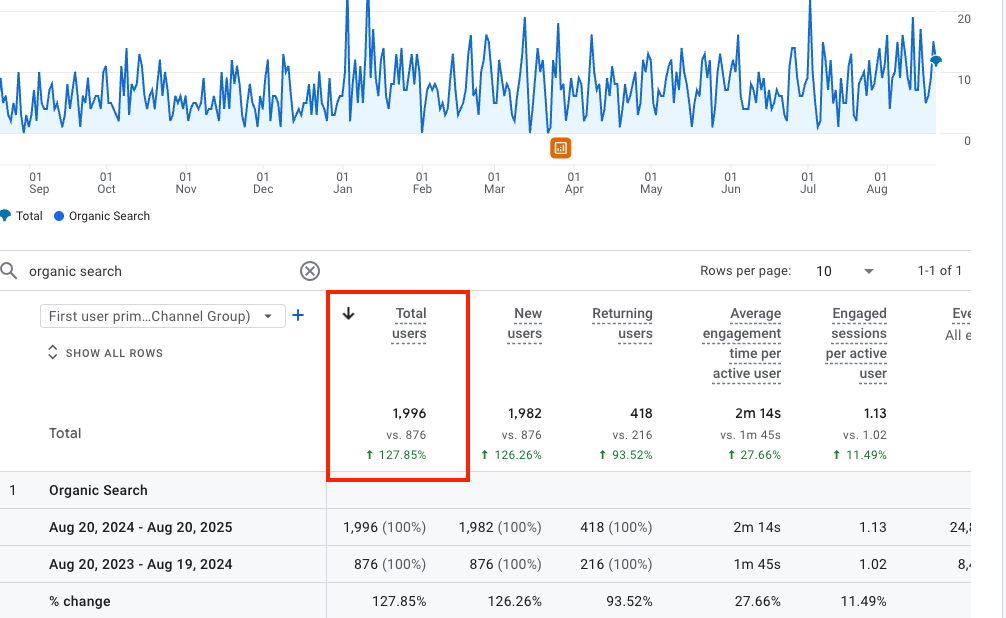
That increase in organic traffic generated $320,000 in additional value for the practice:
| Metric | Before SEO | After SEO |
|---|---|---|
| Organic Visitors | 876 | 1,996 |
| Calls (7.5% visitor → call rate) | 66 | 150 |
| Patients (75% call → patient rate) | 49 | 113 |
| Patient Lifetime Value | $5,000 | $5,000 |
| Total Lifetime Value | $245,000 | $565,000 |
Not every practice will see the exact same results, but this gives you a realistic picture of what SEO can produce when it's done right.
The next step is understanding what this could look like for your practice.
Could Your Practice See Results Like This?
If you're evaluating dental SEO or comparing providers, I offer a free SEO audit where I review your website, search visibility, and competitive landscape.
You'll receive a clear assessment of:
- Your current organic search visibility
- Opportunities to grow traffic and patient inquiries
- How competitive your local market is
- What an effective SEO strategy could cost
Beyond Price: How to Choose the Right SEO Partner
Pricing is important, but it's only part of the decision. To compare SEO providers effectively, you need to look at what's included, how the work is done, and who is responsible for your results.
That's exactly what my SEO scorecard is designed to help you do.
1) Compare Options With My SEO Scorecard
Download my scorecard to compare SEO providers across the most important factors. This will allow you to compare "apples to apples" and ensure you know exactly what you are getting for the price.
 Click here to create a copy
2) Choose the Right Pricing Model for Your Practice
There are four common SEO pricing models you'll find:
Monthly SEO Retainer (Recommended)
A monthly SEO retainer supports a comprehensive strategy across both on-site and off-site SEO. It's the best model for practices focused on consistent, long-term growth.
Project-Based SEO
Project-based SEO is a one-time engagement focused on specific improvements like page speed optimization. I don't recommend it for most practices, as meaningful SEO results typically require a more comprehensive, long-term strategy.
Hourly SEO Consulting
Hourly SEO consulting is typically used for strategy sessions, audits, or helping internal teams implement improvements. It's best for practices needing one-time support, expert guidance, or short-term SEO help.
Bundled SEO Services
SEO is sometimes included as part of a broader marketing package alongside services like website management, Google Ads, or social media. It's best for practices that prefer a single provider to manage multiple marketing channels.
3) Avoid Long-Term Contracts (RED FLAG)
Many SEO providers lock you into 12-month agreements with limited flexibility, often including a 3-month out clause that keeps you paying even if results aren't there. These contracts are designed to protect the provider, not your practice. My approach is month-to-month, which means I have to prove my value every single month.
4) Look for Proven Results
Any SEO provider should be able to show clear examples of results they've generated for practices like yours. I've put together a results page where you can see real outcomes from my work so you can evaluate what's actually possible before making a decision.
 See My Results →
5) Understand Who You'll Actually Be Working With
With many agencies, there's often a revolving door of junior team members following a cookie-cutter approach, with layers between you and the person actually doing the work. With a consultant like me, you communicate directly with the person responsible for your SEO every step of the way.
6) Avoid Surprises By Knowing What Should Be Included
Use my Dental SEO Scorecard to evaluate whether an SEO provider includes these core components:
SEO Strategy & Market Positioning
A strong strategy identifies the best opportunities in your market based on demand, competition, and high-value treatments. It should also align with your broader marketing goals and long-term growth.
Local SEO & Google Maps Optimization
Local SEO helps your practice appear in Google Maps and local search results where patients are actively looking. This includes optimizing your Google Business Profile, citations, and local authority signals.
Technical & On-Page Optimization
Your website should have a strong technical foundation so search engines can easily understand your content. This includes site structure, page speed, schema markup, and on-page optimization like titles, headings, and internal links.
Content Development
Effective SEO requires well-built treatment pages and educational content that answers patient questions. This helps establish expertise and improves visibility for competitive searches.
Authority Building & Backlinks
Search engines evaluate your credibility based on signals from other trusted websites. SEO should include building high-quality backlinks and strengthening your authority within your market.
AI Search Optimization
As more patients use platforms like ChatGPT and Google AI Overviews, SEO strategies should include structuring content to be understood and referenced by AI-driven search.
The Bottom Line: Dental SEO Is About More Than Price
Price is important, but the real value of SEO comes down to three things:
- A dental-specific focus
- A strategy tailored to your practice
- The expertise of the person doing the work
Get these right, and SEO becomes a reliable source of new patients.